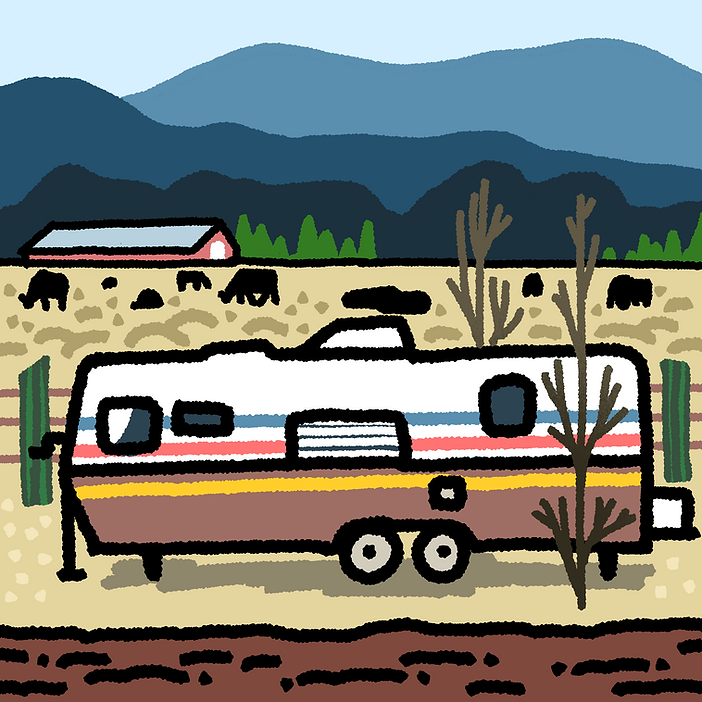
Is traditional art better than digital art? Which one makes me more of an “artist?” Should I stop spending so much time creating images on my iPad and spend more time with a brush in my hand?
These are the questions I’ve asked myself over the course of my art life. My artistic roots were traditional, as were those of every other artist my age. A quick scroll to the bottom of my instagram page shows that I started the account five years ago with timid pencil sketches, followed by a renaissance of chaotic mixed media art. A couple years in I switched over to bold watercolors, then ultimately collapsed into full digital. I’m very happy with where my style ended up, but sometimes I wonder, should I be spending more time on paper and less time on screen?
The decision between whether to throw yourself into digital art or stick to improving your traditional craft is a personal one, and it’s a decision I’m not here to make for you. My goal in this article is to talk about the upsides and downfalls of each medium, so you can best decide which direction to pursue.
So what’s the big difference?
It used to be easy to tell digital and traditional art apart, but the gap is closing.
In the 90’s and early 2000’s, digital art was clearly so, since all we had to work with were pixels and 64 colors. Many people who grew up with PC games are not only familiar with but have fond memories around pixel art and sharp colors. Some of us started out with ClarisWorks and the now memely-famous Microsoft Paint. Most computer art, though it had a charm to it, was cruddy and kludgy.
But technology gets slicker, and with professionally-designed textures and brush sets, you can now make a digital art piece that looks like a full-blown painting. So rather than being strictly a difference of appearance, the difference between digital and traditional art is merely in how the art is created—coded in numbers that present themselves on a screen as an image, or made by pushing materials around in the physical world.
There are lots of pros and cons to digital art. Let’s explore those.
Pros and cons of digital art
Unlike a pen and paper, digital art requires a lump of money up-front. But after spending $300 on a used iPad, $50 on a third-party stylus, and $10 on the painting app Procreate, you can make hundreds of images without the need to buy anything else. There’s no need to figure out what kind of paint to use, what brushes work best, or which thickness of paper to buy. Rather than visiting an art store, you have access to a plethora of art tools included with your painting app. It’s all very easy and straightforward.
In terms of storing those hundreds of images you create, since it’s all digital they will all fit on your device. Need more space? Buy an external hard drive. It weighs as much as a pack of ramen, and takes up even less space. That’s why digital art is ideal for people who have space limitations—everything you need to indulge in a digital art career can be packed in a manila envelope.
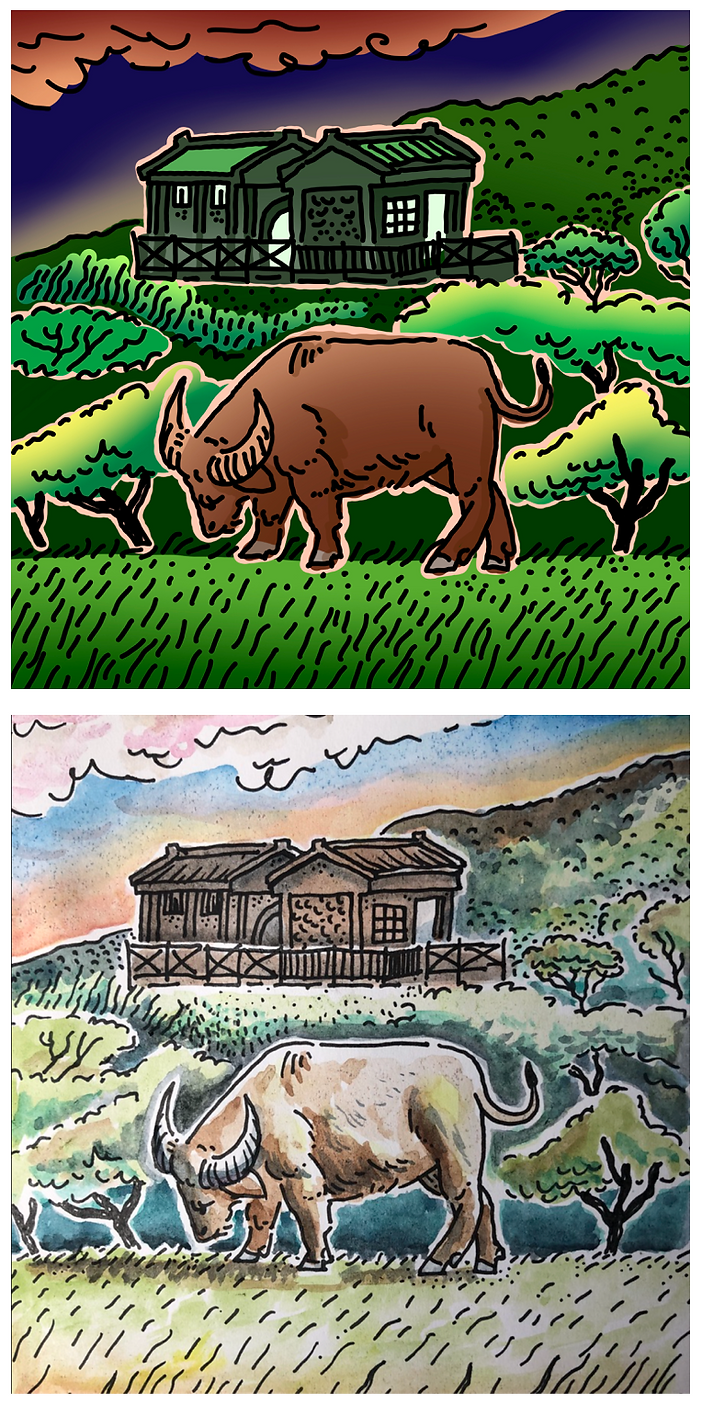
Aesthetically, digital work often looks cleaner and sharper, since there aren’t any physical imperfections for the artist to work around. Colors can be solid all the way through with no sign of brushstrokes, and lines tend to be even and consistent. Since you can often draw right over a picture, proportions may also be more photo-realistic. For people looking for a clean printed comic-book style, this is great news.
As with any medium, there are some downsides to digital art. It may not be taken as seriously by the art community at large—though approval seems to be trending upward. You also many not be able to sell digital art for as much money as traditional art, since you can’t say you invested that much money in one piece. (Unless you make an NFT that actually takes off.)
The other thing to consider is security. If you experience a power outage, a computer virus, or your hard drive gets somehow wiped, you may end up saying “bye!” to all your hard work. Digital information, sadly, is constantly at risk.
Pros and cons of traditional art
Physical art is a tradition that spans thousands of years. What started out as cave paintings and clay tablets became hieroglyphs on stone and paper, then frescoes made of tiles, then marble statues, and eventually oil paintings, watercolor, and print. What the very existence of these artworks tells us, is that physical art lasts. Given the proper conditions and care, physical art can last for decades, centuries, and even millennia.
The other thing the existence of physical art shows us is that it’s a tried and true form of human expression. If you look to the old classics, you’ll find recurring patterns of beauty that you can replicate and make your own, and you can rest easy knowing that in four hundred years, your work will still have the same power to reach people that it does today, maybe even more. Digital art, on the other hand, is a form that’s not even a century old, and who knows what will become of it. In the case of a power loss or a system reset, digital art simply vanishes.
Physical work is subject to elements and error. Watercolors bleed, pens run out of ink, and pencils don’t always erase completely. Inking may be uneven and there may be visible brushstrokes. Whereas digital work (which is literally made of light) tends to be sharp and crisp, physical mediums such as painting and sketching always include a little variation and erraticism. This actually isn’t even a downside—think of it as a little charming human imperfection.
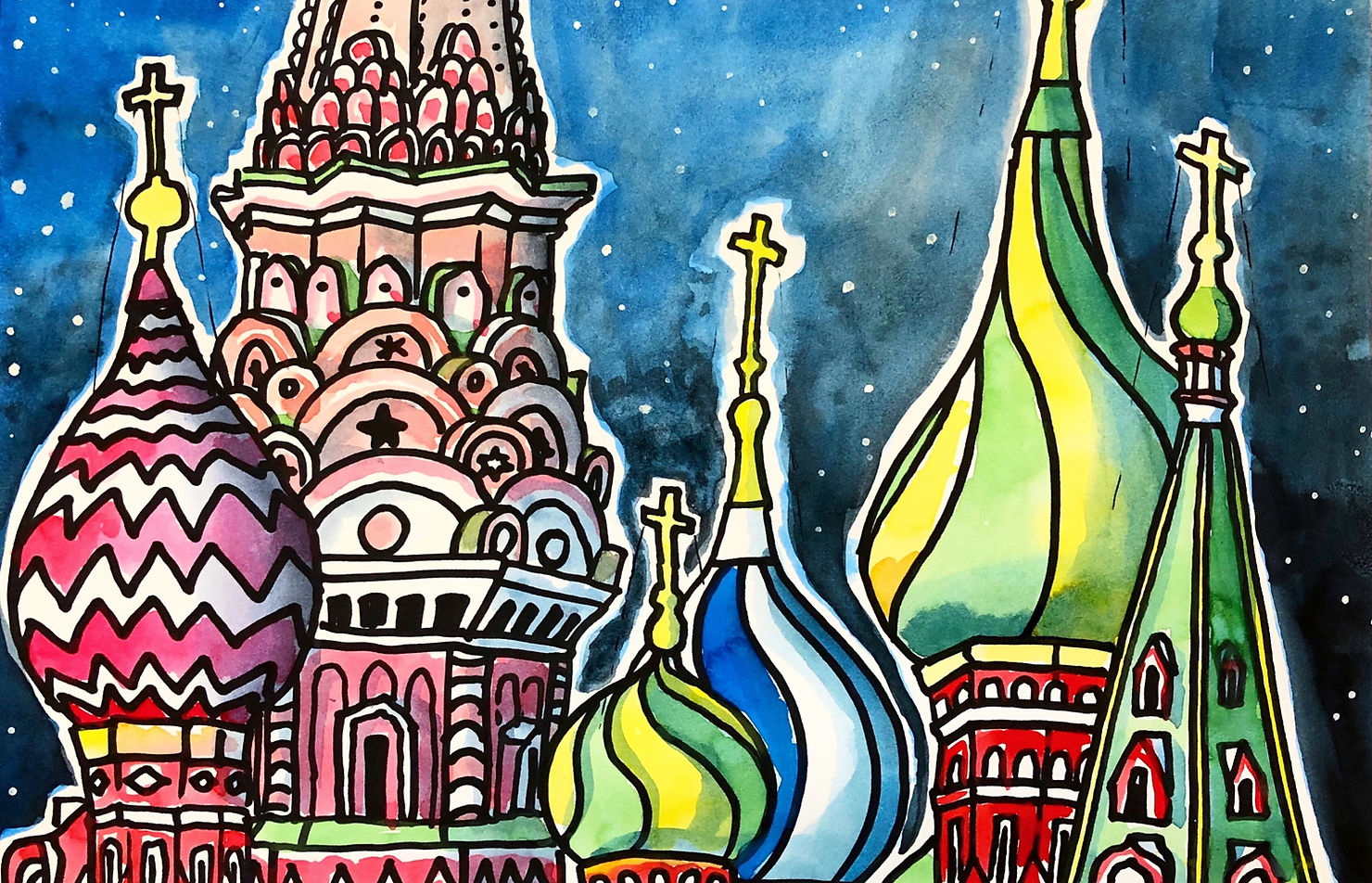
Since traditional art takes up actual space in our physical world, its storage is finite. You can only store so many paintings in your studio before you need to start taking over other parts of your house. In the resources department, buying paints, paper, canvases, and ink can get expensive. It’s an unfortunate fact that better, more expensive materials will make a better product.
The good news about this is that the more money you invest in your art, the more it will sell for. A large oil painting on canvas will fetch much more money on the market than a notebook sketch. It’s a simple fact of investment that the more time and money you put into your craft, the more it will return to you. So if you’re looking to make money off your art, you may consider investing some money in materials.
Now that you know the pros and cons of traditional vs digital art, let me share my own experience with the two.
Why did I choose digital?
Like I said, I started my serious art career in Taiwan with traditional art. I had all kinds of paints, brushes, pencils, markers, different kinds of papers, scissors, knives, carving tools, rubber stamps, stickers, you name it. I worked at a school, which meant I had lots of communal art tools at my disposal, which resulted in an abundance of daily art projects. Life was easy, and I was able to carve out lots of time in my schedule to make art.
But I hadn’t quite hit my stride. See, most of my art heroes worked with forms of printing, be it lithograph, woodcut, Risograph, offset press, or ukiyo-e. My personal favorite artist, Hergé, began a movement in an art style called ligne claire. I’ve never had a printer at my disposal, so I got into digital art. In the beginning I drew with a fingertip on my cracked iPhone screen, but ultimately faced the music and dropped a wad of cash on an iPad and a stylus.
It hasn’t all been purely digital. I spent most of the last year doing a hybrid style, first drawing lines on paper, then taking a picture of the black and white art, then adding color on my iPad. And recently I’ve plunged into fully digital, which has served my overall style pretty well.
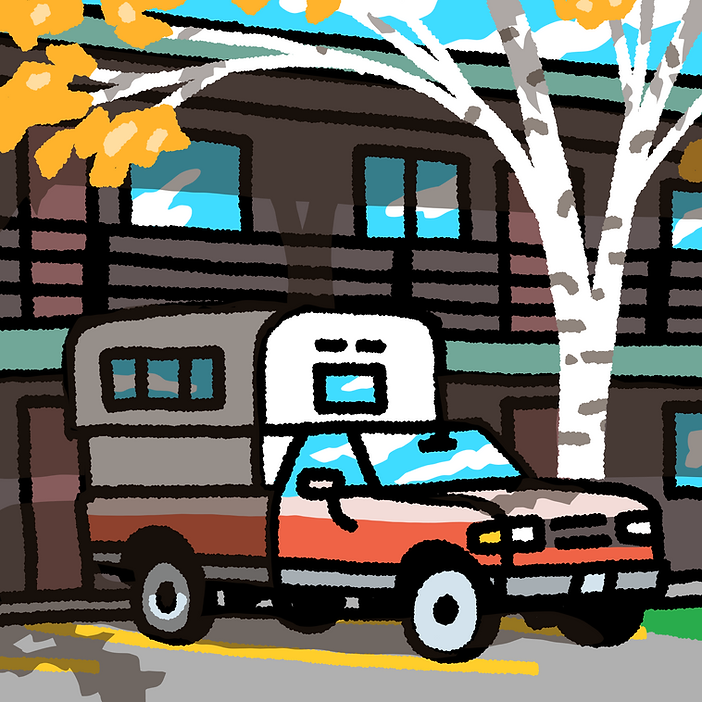
In terms of lifestyle, digital works best for me because I have limited belongings and even less storage. I tend to move around a lot, going long amounts of time in different states, and my possessions are generally limited to what can fit in a small suitcase. Because of this, I have neither the space nor the money to ship around stretched canvas, woodcuts, and paints. It just makes sense for me to store everything digitally.
I’m also pretty dedicated to sharing content with people, daily if possible, on Instagram and Facebook. If I had to crank out a watercolor a day, I’d burn out fast. But a digital piece of daily artwork will bring people the same amount of joy, as well as generate the same amount of engagement on my page.
Who are your favorite artists?
Ask yourself who your favorite artists are. See what medium they used, because the medium you work with will greatly influence the final product. Give their chosen medium a shot, and see if it works with your art.
If you’re unsure who your favorite artist is, I’ve compiled a couple lists of famous artists in digital and traditional, as well as some contemporary artists I follow on instagram. Whose style speaks to you the most?
A few famous traditional artists:
Keith Haring // Famous for doodle-type drawings.
Henri Matisse // Painted in bold colors..
Hergé // My favorite artist, started the ligne claire movement.
Katsushika Hokusai // One example of Japan’s ukiyo-e printing movement.
Grandma Moses // American folk painter.
A few famous digital artists:
Kyle Ambert // Designed the poster for Stranger things.
Charlie Davis // London-based artist, works in clear, sweeping blocks of color.
Fran Meneses // Fran’s success inspired me in the early days of my art.
Because digital art is still only a few decades old, there are no “famous digital artists” in the sense of “famous painters.” Most digital artists are still alive, and as stated above, digital art has yet to stand the test of time.
Some digital artists I follow:
Erique Soon // Malaysian expat artist living in Taiwan. We met on Instagram when he DM’d me to ask what brush set I was using. (I was only doing traditional at the time, so my answer was “a pen,” haha.)
Tuan Nini // A wonderful illustration/animation artist, also Malaysian.
Juju Chang // Taiwanese webcomic creator!
Andrea Fritella // Italian comic artist and illustrator
Natalie Andrewson // Illustrator, makes crazy bold-colored prints.
Wizardthieffighter // DnD illustrator, original inspiration for downloading Procreate.
Piemiin // Very cool thin-line illustrations, a little absurdist.
Some traditional artists I follow:
Caroline Canning // Ireland-based pen and watercolor illustrator.
Sophia Ho // Draws jaw-droppingly beautiful illustrations of life around Taiwan.
Lawrence Keaty // Absolute master of woodcuts.
Raul Colon // Children’s book illustrator, very classic look.
Dan Berry // Illustrator, makes his own dip pens.
Bryan Quick // American, former coworker, artist bestie when living in Taipei. Sketches DnD-style illustrations, terrific imagination. Pen and watercolor.
A great hybrid artist:
Yuko Shimizu // A true illustrator mentor, Yuko draws on paper with a brush and ink, then colorizes on computer.
What is your goal with art?
Ultimately, the main decider between digital and traditional is the message or feeling you want to convey with your art. For a breezier, storybook feel, you may find watercolors tell your story the best. For cartoons, digital art works well to mimic those old mass-printed comic books. Your story may even be best told in ballpoint pen on scrap paper.
Whatever matches what’s in your head is the best route for you.


 zudlow
Leave a comment