What keeps an artist going? Is it a cup of coffee and a blank notepad? Or is it a white canvas, a fresh set of paints, and a hundred ideas? Is it knowing that everyone will love what you create? Or is it the relaxed, accomplished feeling you get after finishing a project that keeps pushing you towards greatness?
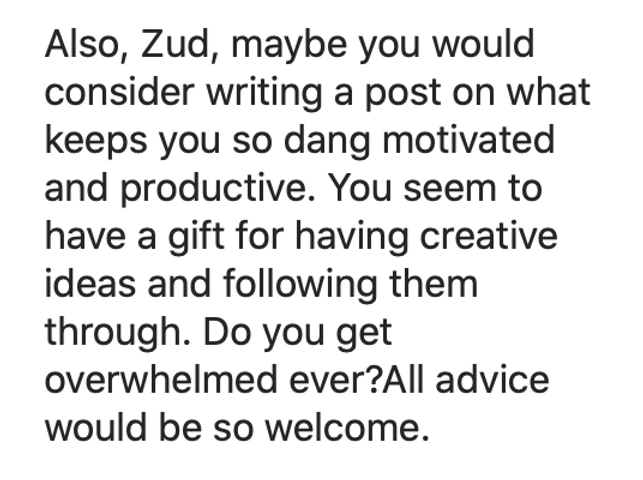
Do you stay motivated by dedicating yourself wholly to the grind? Do you wake up at five o’clock to go for a jog, then eat a bowl of fruit and start writing your daily blog post?
I would love to think of myself as any one of those people. But the truth is, I’m incredibly lazy. I don’t set daily writing and drawing times. The truth is, I couldn’t keep a schedule if it was glued to my hand. It would be very easy for me to lay in bed watching Facebook videos for an hour.
So when someone asked what keeps me motivated and productive, I knew the answer was not going to be straightforward.
What’s the secret? What’s the secret to walking the long road consistently?
As artists, we tend to believe in the myth that inspiration and motivation happen to us naturally, and happen every day. We believe that when we wake up, because we are artists, we’ll get inspired, and with that inspiration we’ll create. And if the project is good enough, we’ll stay motivated until the project is finished. But ask any successful artist you want, and you’ll find this is far from true!
If you ask me on any given day, chances are I’ll feel neither motivated nor productive. When I am inspired, I’m probably sitting on a couch and won’t do anything about it. And when I am motivated, chances are my ideas and inspiration are dry as a fossilized riverbed.
These two concepts, inspiration and motivation, deserve a closer look. How do we, as artists, build an environment for both concepts to exist, and how do we keep them going until we complete projects?
Keep reading to see what I’ve learned.

On inspiration
Given all the evidence I’ve gathered for the past eleven years, I can only assume that I am to blame for my dried-up inspiration.
Inspiration came easy when I was a teenager. My ideas were large-concept. My plots centered around underwater cities, floating sky-islands, great bicycle escapes, wooly mammoth smugglers, teleporting buses, and whimsical conspiracies. There seemed to be no end to my ideas, because I never limited them.
Because I had no idea how the world worked, I wrote whatever came into my head, without judgment. With nobody to please and nobody to offend, I forged ahead, writing thousands of words that would never see the light of day. Apparently, inspiration thrives in naïvety.
It’s an embarrassing journey, looking through my old stories. They’re fraught with immature ideas about how the world works. Machines worked impossibly, timelines were convoluted, and some of the characters can only be described as racist. Yet despite all this, in 2010, I decided it was time to publish my first book.
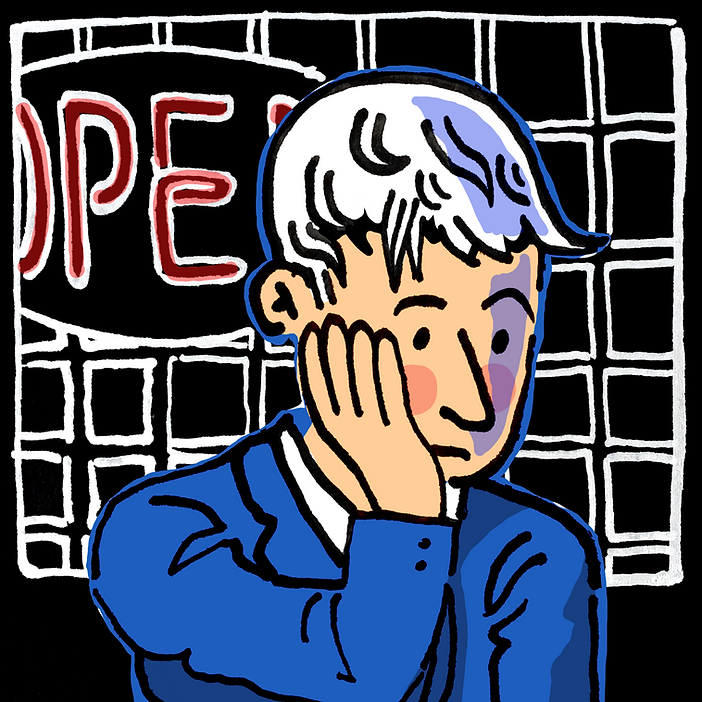
The first rejections felt like badges of honor, but somewhere around rejection form letter #24, my oomph shriveled up and died. My dream of being a teenage novelist success went out like a candle as I passed into my early twenties.
I had to grow up, and, I assumed, so did my writing.
Instead of continuing on my merry whimsical way, I found myself scrutinizing everything I wrote. What was working, and what wasn’t? What characters were unrealistic? What plot devices were contrived and forced? What would offend potential readers? Who was my audience, and how could I tailor my work to their tastes?
Every time I started a novel, I found myself asking, “If I wrote a query letter for this novel, would it get rejection or a callback?” I started gatekeeping my ideas, and my inspiration went on vacation.
The Greeks saw inspiration as something outside of and apart from you. It’s tempting to name your muse, because it does feel like being in a partnership with someone. If you treat inspiration with an open mind and enthusiasm, it will provide you with idea after idea. But if you approach it judgmentally, ready to evaluate every idea that pops up, it will shut down, and it will stop talking to you.
So what’s the secret? How do I churn out blog post after blog post, and comic after comic?
First of all, I write everything down. I keep a page on my Notes app, and every time I have an idea, I write it down. Whether it’s a story idea like, “Fantasy game where you can ONLY choose to be human,” or just a philosophical thought like, “If you like animals but hate people you’re probably a bad person,” everything gets noticed and written down.
Since weaning myself off of social media, I’ve started keeping a notebook next to my bed. It’s for writing down midnight inspirations. This morning I woke up just before sunrise, and frantically wrote down, “Make people nonthreatening by imagining them with high-wasted pants, coming into a pizza parlor walking like a robot.” I don’t know how that’s going to be useful, but it made me smile.
So what’s my boiled-down takeaway on inspiration? The deadliest combination is waiting for inspiration to strike, and then judging every idea that it brings with it.
Keep an open mind, and the ideas will flow.
On motivation
Now that I’ve explained how I keep ideas coming, I want to talk about how I keep myself motivated to finish those ideas.
When I lived abroad, every day found me teaching classes, going to the gym and doing the bare minimum, and going home to watch Netflix. I was happy and comfortable. But I realized something around year two abroad: If I didn’t start building something long-term, two more years would pass me in a flash, and I’d have nothing to show for it except crow’s feet and an intimate knowledge of How I Met Your Mother. (It was available on Taiwanese Netflix back then.) I realized that I could be doing the same thing every day for ten years, and go home empty-handed at the end of it.

That realization woke me up. I started taking my art seriously, and creating daily. In the morning, I would sit down at the kitchen table with paints. In the afternoon at school, I would sketch while my students took tests. And at night, I would hit the gym and pump weights until I couldn’t walk. I’d be sure to eat a protein-packed meal before bed.
After a few months of rigorous routines—in both art and exercise—I started to see real results in my life. My art style began to change, defining itself as something unique and predictable. I also started to gain a ton of muscle mass.
Through this process, I realized that the cycle of motivation and productivity isn’t something you can get overnight.
If you do an hour of intense exercise, you won’t see any changes in your body. But if you work out every day for a month, you’ll start changing, and fast. Likewise, I realized that one art day a week wouldn’t make a difference, but fifteen minutes of art every day would. I realized that progress didn’t happen suddenly, but over the course of months and even years.
Holding onto this revelation, I started to make art a priority. I started taking time on art, letting some work sit for a whole day before finishing it. I had faith that if I kept it up, I would get better and better.

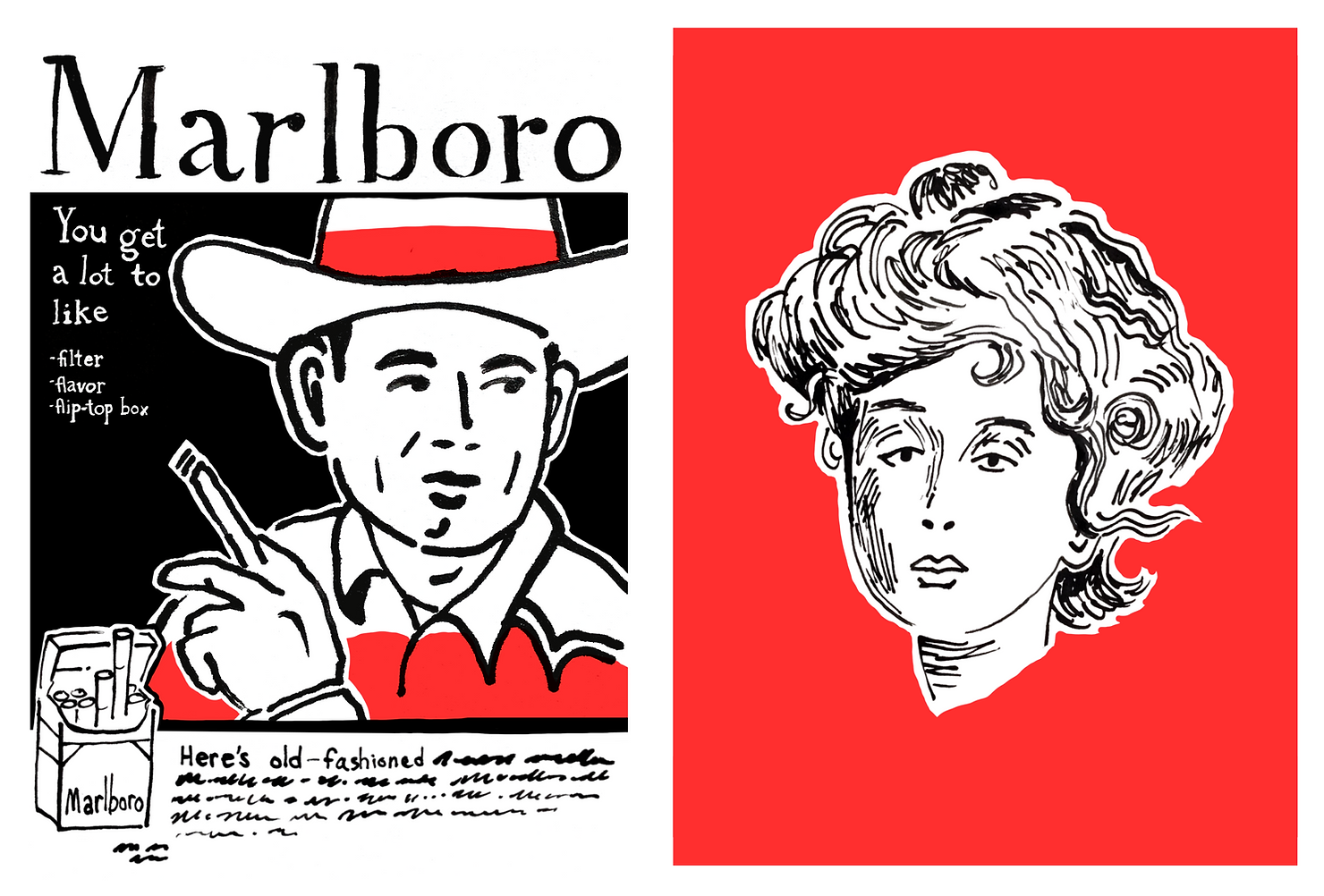
After I came home in August, I released a sticker set for LINE, and reproduced some famous images. As the weeks and months passed, I racked up my hours, and as I put in the time, my discipline and tolerance grew. Now I can spend three or four hours a day just sitting down and making art, whereas I used to only manage fifteen minutes at a time. Projects don’t loom anymore. This is a huge change from even just a year ago, when I used to sketch between teaching classes!
Now, two years after starting my art journey, I create nearly every day. Whether it’s a blog post, a comic, or even a simple spot illustration to keep my muscles going, I try to put pen to paper at least once a day.
How do you get started?
A proverb (often misattributed to Chinese wisdom) says, “The best time to plant a tree is twenty years ago. The second best time is now.”
You won’t suddenly wake up one day and find yourself an incredibly productive and motivated person. Going cold turkey on anything will backfire, and you’ll find yourself back to your old habits. Believe me, I’ve tried seven ways from Sunday! But if you put work in every day, you will wake up one day and find you’re exactly the kind of person you always wanted to be. it just takes time getting there, and you have to keep that day in your mind’s eye. You will get there! The trick is…well, getting through the time in between.
Start slowly, and start today. Start spending five minutes daily on art, or music, or whatever discipline you’re trying to build. If you can keep it up for a while, crank that up to fifteen minutes a day. The longer a tree takes to build a root system, the stronger that tree will be. There’s no shame in building up momentum over the course of a few months.
One of the problems I’ve encountered is that progress never feels like progress. An hour of ukulele practice daily does not give me a boost of dopamine. While you’re in the middle, slogging it out, you probably won’t feel anything, and will want to give up.
Get used to this feeling. Get used to the monotony. Celebrate your progress every day, and keep looking towards the end product. Remember that if you put fifteen minutes in every day, a year from now you can look back proudly on a total 91 hours of work. That doesn’t happen unless you start now!
The literal bottom line of this post is that inspiration and motivation only happen on a foundation of hard work. Be patient with yourself, and get moving!


 zudlow
Leave a comment