The 2020 SARS-CoV-2 pandemic provided so many opportunities for style shifts. And by that I mean we had the chance to recreate the 50’s, and we didn’t.
It’s hard not to idealize the Boomers’ heyday. From the death of tailored style to the decline of affordable domestic help and florists, we’ve lost a lot of cultural cornerstones since the days of Grease. Most people who grew up in the 50’s and 60’s have few complaints—or should I say, those who weren’t being actively oppressed. The human rights won since 1950 far outweigh the overwhelming loss of style, and you won’t find any complaints about that in this article.
What happened between 1950 and now? When did middle class people stop wearing tailored suits and fancy hats? When did buying flowers for the table become a twice-a-year luxury? Was it the Boomers’ fault that we had to stop eating bread and start buying expensive organic vegetables just to avoid cancer?
And what’s stopping us from going back?
The perfect environment for change
Creativity thrives in limitations, and boy did we see our fair share of limitations last year. From restaurant occupancy limits to mandatory facial coverings, we learned fun new phrases like social dxstancing (I don’t want to write the whole phrase because I’m sick of it), “Wear a mask!” and “Will you shut up, man?” whenever someone mentions a scientific study they read on the shady second page of Google. We learned that during a pandemic, you can only eat indoors if the indoors is outdoors, and going to church is pretty risky, but you can attend massive outdoor gatherings.
I always experience regret. Always. Sometimes it’s about something I did, but the more common regret is stuff I could have done differently. Even after this whole pandemic is over and I can travel again, I’ll probably think of things I wish I did differently during this time at home. My regret question today is, with all these restrictions, why didn’t we improvise more?
We could have brought back a golden age of style, and we didn’t. Instead, we created an expensive dystopia where going out on the town with friends requires so many safeguards, it feels like a punishment. (Signing into restaurants with your name and phone number is a tad Orwellian.) In retrospect, I see lots of things we could have done differently to stay safe while still having a blast and looking stunning.
If you’ve stuck with my yarn-tangle of thoughts so far, you might as well keep reading to see my list of five things Covid should have brought back but didn’t.

1. Drive-in movies
From a virology standpoint, what could be safer than watching a movie from the comfort of your car? You’re separated not only by space, but also glass. You still get that popcorn and soda experience with a big screen, without having someone’s butt in your face every time they have to squeeze by to use the bathroom.
Movie theaters were destroyed last year. The graph for ticket sales by year looks like 2020’s U.S. covid cases by month, in reverse.

No surprise there. Nationally, ticket sales have been plummeting since 2002. For anyone who’s been paying attention over time, while sales have been dropping, ticket prices have been slowly climbing. When I was six, a movie theater ticket cost $4. If I wanted to go to the movies this year for my 30th birthday, I’d be shelling out $9. With more and more people realizing that they could enjoy the same movie experience at home with Blockbuster, and eventually Netflix, interest in public theaters waned. Last year brought the cinema crisis to a head, with over seven thousand theaters closing in October.
But hear me out. Would this not be the perfect time to reintroduce the drive-in theater? There are a surprising amount of active drive-ins across America. With some shrewdly-executed advertising campaigns and attractive deals on tickets, 2020 could have become the year of drive-in dates in 50’s cosplay. Park your cars side by side and enjoy the show at a distance. In addition to being fun and exciting, it also maintains enough distance to make virologists and parents happy.
But 2020 disappointed us. I guess we’ll just have to be happy with pajamas and binge watching.
2. Car hops
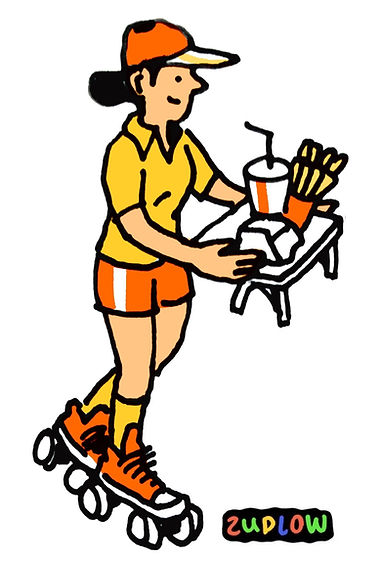
You’ve already got this going with Sonic, unless you’re sad enough to live in Alaska, Hawaii, New Hampshire, Rhode Island, Vermont, or Maine. (Boo hoo me.)
At most restaurants, curbside service is depressing. Park alone in the designated spot outside the restaurant you used to love going to with friends, and call a posted phone number. In some amount of time, your food will arrive at your car window in a paper bag. Now it’s time to drive home and eat it in front of ANOTHER Julia Roberts romcom on Hulu.
The cost of such a depression meal? One thousand dollars. (Or at least that’s what it feels like—food prices are in the pits this year.)
But you know what’s not depressing? Having someone roller skate out to your car to bring you burgers on a tray that hooks onto your car window. That’s freaking awesome.
3. Milk men and delivery people
Why do we think GrubHub, DoorDash, and PostMates are innovations? Our parents and grandparents were getting food delivered to them on the daily. Sure, the phenomenon also helped normalize door-to-door salesman, which were basically 3D Facebook ads that may or may not have also been serial killers. But still, imagine calling the grocery store and ordering your groceries for the week without ever having to leave your living room. Exactly like UberEats, except without the horrific surcharges. (And why are the names of most delivery services are just two words smashed together in CamelCase?)
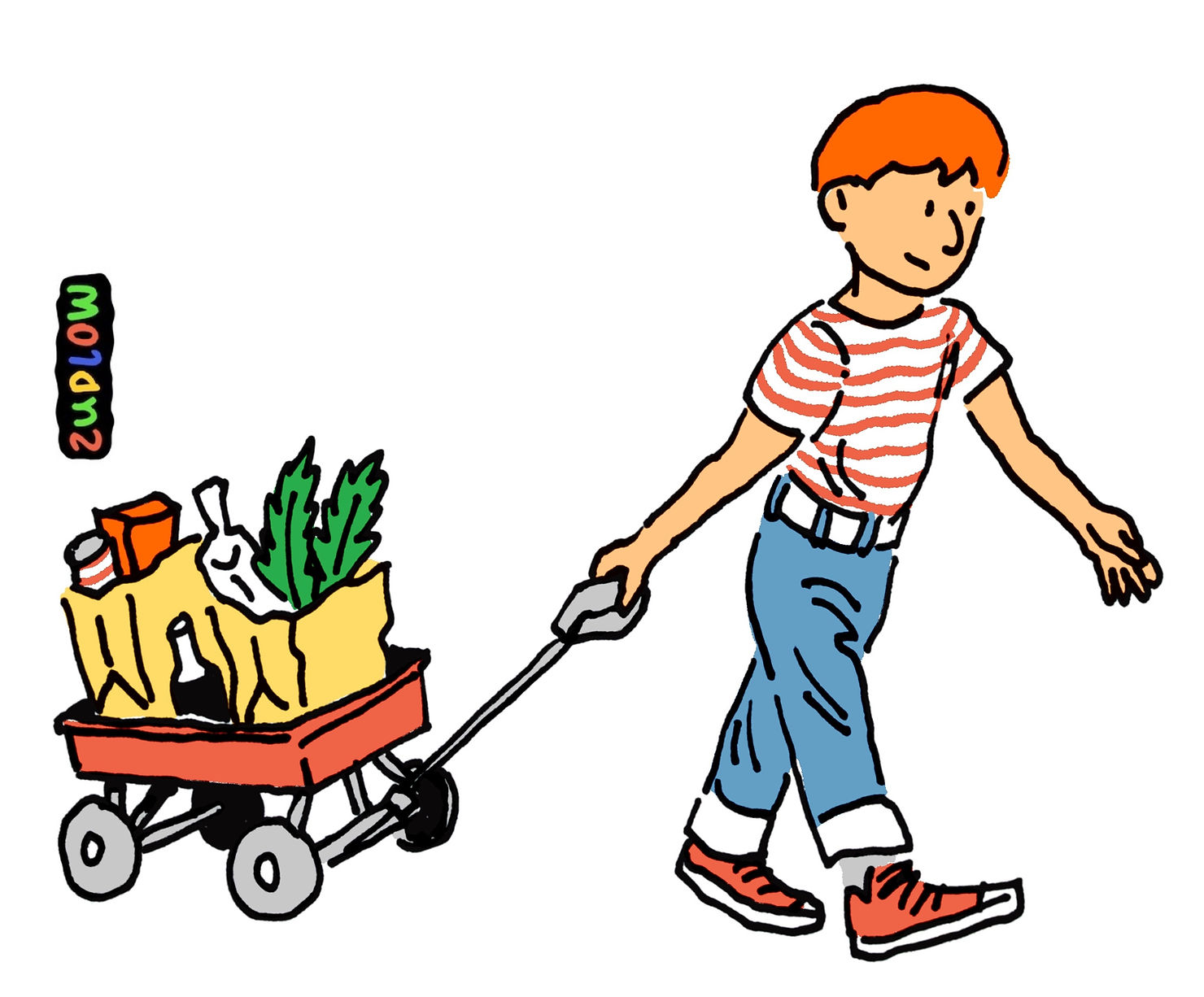
I’ll admit that I don’t fully understand the economics behind the system. Paying a kid a dollar to pull a Radio Flyer wagon full of groceries is a crime, and I know milkmen have a bad reputation of…let’s say not social dxstancing when they deliver the milk. But our parents and grandparents grew up with these little conveniences, and it doesn’t seem fair that we don’t have them.
Maybe that’s why all Millennials have anxiety.

4. Fancy hats with veils
Remember those fancy veils that women wore in old movies? Add a plastic face shield, and you have a safe and fashionable accessory.
I think our collective mental health would be much better if the slogan was, “Wear a hat, save a life.”
5. Mom & pop general stores
“Two weeks to flatten the curve” would have worked perfectly if we had quarantined towns/cities. You’re free to go out with friends, go shopping, go to church, and go to bars, as long as you don’t leave your town or city. For the next few paragraphs, please join me in ignoring the fact that this would have been impossible to enforce.
Here’s my idea of how city/town quarantine would’ve worked. Chain grocery stores shut down for two weeks. State governments buy the stores’ perishable goods at cost value, and redistribute them to the poor. The places that are left to operate? Mom and pop grocery stores.
To avoid small overcrowded spaces, a birthday system is implemented—Those born in January and February are allowed to go to the store on Monday, Pisces and Aries can go to the store on Tuesday, etc. and then on Sundays, the stores are closed.
This redistributes wealth back into the pockets of working class people, and bolsters the economy.
But no, we didn’t go this route. Instead, small businesses were put under crushing restrictions, placing countless family businesses on death row, and shutting down “third places” that communities relied on for mental health.
You know who did thrive last year? Jeff Bezos. That’s right—in the year when people were being encouraged to quit their jobs for patriotism, the “stonks” dude who doesn’t even give employees pee breaks became as rich as a Vanderbilt.
What would our economy look like today if the revenue had gone to small family businesses and restaurants instead?
My reality-check conclusion
It’s fun to imagine a revamped 50’s—with human rights this time around—but in the end, we have to accept that the world of drive-ins, milkmen, fancy hats is miles behind us. There’s no such thing as coffee for a nickel anymore. Our economy is in shambles, for sure. But in many ways, it’s a good thing that cheap domestic help is a thing of the past, and children aren’t being asked to carry groceries to a stranger’s house for some pocket change.
Of course I wish, along with everyone else, (except Jeff Bezos) that the 20’s had gotten off to a better start, but that’s not the turn of the decade we got. Naturally, I hope by 2022 or 2023, life will look different. I have a fantastic hope that someday our economy will get back on track, and a burger and fries will cost $5 again, and not $15. We can’t keep on the path we’re going on, but unfortunately, that’s not up to me.
In the same way we can’t blame climate change on whether or not we use plastic straws, consumers aren’t to blame for our ramshackle economy. A surprising amount of economic decisions are made by legislature as well as large companies and corporate lobbyists. At the day’s end, what our culture ends up looking like isn’t really up to us.
Telling working class people that it’s their job to keep the country afloat during the pandemic is nothing more than narcissistic gaslighting wearing nationalism like a Halloween ghost costume. You can either tell people to quit their jobs to stop the spread of a virus, or you can tell them they need to order a $17.99 nacho plate to keep the local Mexican restaurant alive. You can’t have both.
Sure, order art directly from artists rather than from Amazon, and visit a locally-owned restaurant rather than McDonalds. Small choices do make a difference. But if you wake up tomorrow and the economy is in ruins, it’s not your fault. Unless you’re a corporate monarch. (Yeah, I’ve got beef.)
Maybe the real pandemic was consumerism all along.


 zudlow
Leave a comment